Description
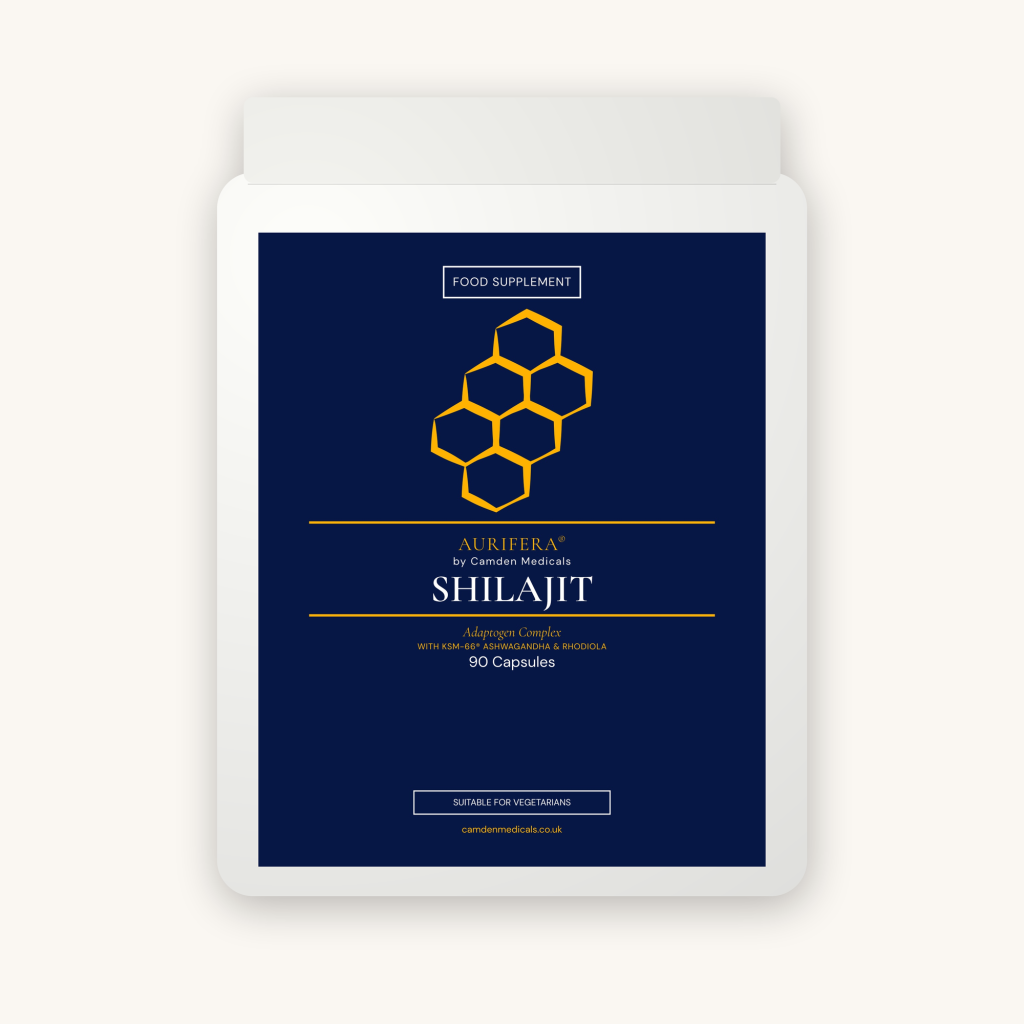
Shilajit Adaptogen Complex pairs three time-tested adaptogens — Shilajit Extract (60% fulvic acid), KSM-66® Ashwagandha and Rhodiola rosea — with Zinc, Vitamin D3, Vitamin B6 and Black Pepper Extract (95% piperine) for enhanced absorption.
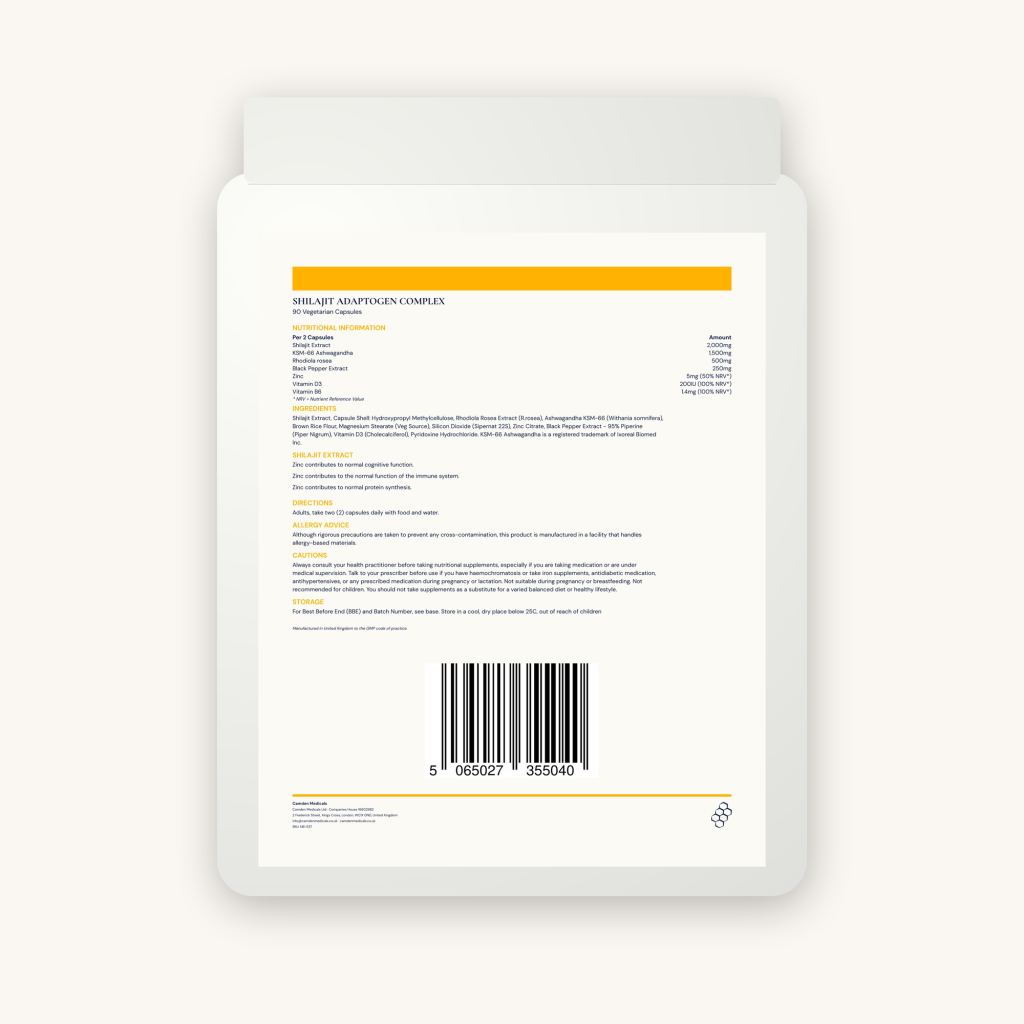
Per 2-capsule serving
- Shilajit Extract (60% fulvic acid) — 2000mg
- KSM-66 Ashwagandha — 1500mg
- Rhodiola rosea (3% rosavins, 1% salidroside) — 500mg
- Black Pepper Extract (95% piperine, providing 9.5mg piperine) — 250mg
- Zinc (zinc citrate) — 5mg (50% NRV)
- Vitamin D3 (cholecalciferol) — 200iu (100% NRV)
- Vitamin B6 (pyridoxine hydrochloride) — 1.4mg (100% NRV)
EFSA-approved health claims (vitamins & minerals)
- Zinc contributes to normal cognitive function, the normal function of the immune system, normal protein synthesis, normal DNA synthesis, the maintenance of normal testosterone levels in the blood, normal fertility and reproduction, and normal acid-base metabolism
- Vitamin D contributes to the normal function of the immune system, the maintenance of normal bones and teeth, normal muscle function, and normal absorption/utilisation of calcium and phosphorus, and has a role in the process of cell division
- Vitamin B6 contributes to normal psychological function, the reduction of tiredness and fatigue, and the regulation of hormonal activity
Key features
- Multi-adaptogen complex with a fully-disclosed micronutrient stack
- 90 capsules — 45-day supply at 2 capsules daily
- No artificial colours, flavours or preservatives
How to take: Adults, take two (2) capsules daily with food and water.
Manufactured in the United Kingdom to GMP standards. KSM-66 Ashwagandha is a registered trademark of Ixoreal Biomed Inc.
About the ingredients
Ashwagandha (Withania somnifera)
Ashwagandha (Withania somnifera) is a small evergreen shrub in the Solanaceae family, native to India and parts of the Middle East and North Africa. It has a long history of use in traditional Ayurvedic medicine, where the root is used as a tonic and adaptogen. It is sold in the UK as a food supplement, typically as a standardised root extract. There are no authorised UK food-supplement health claims for ashwagandha; trial evidence for stress, sleep, and related outcomes is concentrated on specific branded extracts (KSM-66, Sensoril, Shoden) at specific durations. Read more in the encyclopaedia
Black Pepper (Piper nigrum)
Black pepper (Piper nigrum) is a flowering vine of the Piperaceae family whose dried unripe berries are the world's most-traded spice. Piperine, the principal alkaloid, is the bioactive studied for its broad effects on drug-metabolising enzymes and intestinal absorption. There are no authorised UK food-supplement health claims for black pepper. Piperine-containing supplements can affect prescription-medicine handling — disclose use to your prescriber. Read more in the encyclopaedia
KSM-66® Ashwagandha (Withania somnifera root extract)
KSM-66® is a specific branded form of Withania somnifera (ashwagandha) root extract, manufactured by Ixoreal Biomed (Hyderabad, India) under a patented milk-extraction process. It is the most-cited standardised ashwagandha extract in the modern human-trial literature and the branded form whose trial portfolio underpins most clinical-grade ashwagandha supplements sold in the UK. KSM-66 standardises ≥5% withanolides by HPLC and uses root-only material (no leaf). There are no UK-authorised food-supplement health claims for ashwagandha; trial framing on KSM-66 surfaces must remain descriptive. UK FSA / CoT 2024 opinion on ashwagandha raised hepatotoxicity questions — that caution applies to KSM-66 as much as to generic forms. Read more in the encyclopaedia
Rhodiola (Rhodiola rosea)
Rhodiola rosea is a high-altitude perennial of the Crassulaceae family with long traditional use in Russian, Scandinavian, and Tibetan herbal practice as an adaptogen. Sold in the UK as a food supplement (no authorised health claims) and via the separate THMP regulatory pathway (where THMP wording can appear). Standardisation by salidroside + rosavins is the quality marker. Pregnancy: avoid. Read more in the encyclopaedia
Vitamin B6
Vitamin B6 is a water-soluble B-vitamin the body uses for amino-acid metabolism, neurotransmitter and haemoglobin synthesis, and immune function. UK NHS reference intakes are 1.4 mg/day for men and 1.2 mg/day for women. Most people get enough from food. NHS guidance cautions against long-term supplemental intakes above 10 mg/day because chronic high doses can cause peripheral nerve damage. Read more in the encyclopaedia
Vitamin D3
Vitamin D is a fat-soluble vitamin the body uses for normal calcium and phosphorus absorption, bone and muscle maintenance, and immune function. UK NHS guidance recommends 10 µg/day (400 IU) for everyone aged four and over from October to March, when UK latitude limits the skin's ability to synthesise vitamin D from sunlight. Read more in the encyclopaedia
Zinc
Zinc is an essential trace mineral the body uses as a co-factor in over 300 enzymes — including those involved in immune function, DNA synthesis, protein synthesis, and wound healing. UK NHS reference intakes are 9.5 mg/day for men and 7 mg/day for women. Most UK adults meet these intakes from food; intakes are more likely to fall short in vegetarians, vegans, older adults, and others with reduced intake or absorption — the groups where a standard-dose supplement is most often used. Read more in the encyclopaedia